Showing posts with label bfisouthbank. Show all posts
Thursday, 5 September 2013
57th London Film Festival - Programme Announced
Before updating all the posts about my week at the Venice Film Festival I am pleased to announce the beautiful programme of this year's LFF.
I am very glad to see that I'll have the chance to catch up some films I coulnd't see in Venice.
Enjoy and get yourself some tickets if you'll be around!
Philomena by Stephen Frears is a must-see of the year, two very different people as Judi Dench and Steve Coogan gave the film an intense and dramatic interpretation punctuated by hilarious British humour. I saw it in Venice, and the audience was just amazed by the greatness of the actors, and the moving truth of the subject matter. So, it makes me very happy to see the film will open the Festival on October 9th.
Among the films showed in Venice there will be:
Tracks by John Curran starring the beautiful and modest Mia Wasikowska
Tom at the Farm by Xavier Dolan
Under the Skin by Jonathan Glazer starring Scarlett Johannson
Gravity by Alfonso Cuaron starring George Clooney and Sandra Bullock
Night Moves by Kelly Reichardt starring Dakota Fanning and Jesse Eisenberg
Parkland by Peter Landesman
Kill Your Darlings by John Krokidas starring Daniel Radcliffe
The documentary At Berkeley by Frederick Wiseman
Bertolucci on Bertolucci by Luca Guadagnino and Walter Fasano
May in the Summer by Cherien Dabis
Via Castellana Bandiera by Emma Dante starring Alba Rohrwacher, Emma Dante and Elena Cotta
Here you can find the well organised PDF Programme, and remember to book your tickets on the BFI website!
Friday, 7 June 2013
10 great American road trip films - BFI List
My most recent discoveries are the Lists on the BFI Website. I think they are a smart alternative to long articles, because they allow the reader to select his/her area of interest, and have easy access to suggested viewings.
Since I personally love road trips, and one across the US is my biggest dream, this list is one of my favourite. You can find the original list at this link:
Here are the 10 great American road trip films:
The Hitch-hiker (Ida Lupino, 1953)
Five Easy Pieces (Bob Rafelson, 1970)
Duel (Steven Spielberg, 1971)
Two-lane Blacktop (Monte Hellman, 1971)
Badlands (Terrence Malick, 1973)
Starman (John Carpenter, 1984)
Something Wild (Jonathan Demme, 1986)
Thelma & Louise (Ridley Scott, 1991)
Sideways (Alexander Payne, 2004)
Old Joy (Kelly Reichardt, 2006)
Check On the Road, the book review, at:
Thursday, 30 May 2013
BAFTA Masterclass: Film Make-Up with Lois Burwell
Let's now have a look at most of the films she worked on starting her career in 1982.
(Lois Burwell was born in London and began her career as a make-up artist by first working on film school films and low budget projects. The first break into feature films came on Bill Forsyth's Gregory's Girl followed by Peter Greenways The Draughtsman's Contract.)
After the showreel, the first question Lois was asked was how she came to the decision of becoming a make-up artist. As I have previously stated her reply was very simple, and clear: because of her love for films. She remembers something that happened when she was 14: she was coming back from school with her friends, when they saw the shooting of a BBC play, and accidentally, they were shown the make-up room. She thought: "I'm going to do this."
Of course when they did not have special effects it was more difficult to achieve this purpose: they had to find a place in which the person and the character meet, and work on that.
For her work on Lincoln ( Steven Spielberg, 2013), for example, there were years of work behind the idea, an idea which changed over the time, and a film on which she was added later, so she had to adapt to that new idea.
I had never imagined that make-up designers had such a big involvement within the film production, but I realised it when Lois explained her working method.
First of all, they read the script, and picture the scenes in their minds to engage with the story, secondly they write the make-up script, thirdly they look for images based upon that script, and work on them.
Lois made a very nice comparison between her job, and making films in general, and weddings. You can organize everything, even the smallest detail, but you will always bear in mind that not everything can go as planned, and be ready for the unexpected.
Another expression I loved was that their aim is to "make people extra-ordinarily ordinary." Which always concerns the ability of making a character believable.
Since I studied Stardom this year in my course, it was very helpful to hear what someone, who actually worked and works with stars, had to say about it. She stated that there is a big difference between ACTORS, and CELEBRITIES. Real actors are those who are prepared to change in the film-process, for the film's good. Therefore, it is very difficult to work on big-budget films, because they have to deal with the studio and the star persona. To explain this she told an anecdote about the production of Braveheart. There was a big concern with Mel Gibson's blue face. They received a reply by the producers saying: "Think you should lose the blue." Gibson, however, as main actor, director, and part of the production, liked it so they could keep it.
Since she had to focus on a single person many times, with Gibson and Tom Cruise, for example, she says that you always have to be careful to not find yourself working for the actor, but always for the film.We were, then, shown a clip from Magnolia. The interview of Tom Cruise undermining his star persona. Lois explained how they created that look: she discussed it with Cruise. It had to be a complete body make-up, which had to change between the two parts of the interview in relation to the change in the character. It is a parody of the star persona, there had to be a strong contrast between the body (in the first part), and the face (in the second).
She always talks to the actors through the mirror, it's a spacial relationship which allows you to see something lying behind the surface.
One of the last point she touched was the change from 35 mm to the digital and the 3D. How does her role change in relationship to the technological developments in visual quality? Her answer was that there are many new choices unravelling for filmmakers, but just because some tools are new it does not mean they are the only right ones to use. The ability of the filmmaker lies also in choosing the best tool for each particular task.
About her work with Steven Spielberg she said he is a very demanding director, and that when you work with someone for such a long time it is because you have a natural connection with that person, and it developed through the work you did together. She also said that Spielberg is one of those directors who really shows his love for films during the shooting. When a shot comes out right he stands up and says: "Yes! That's it!", with the enthusiasm that only who really loves something has.
"Working in films is a privilege, but some people forget that." Lois Burwell.
Thank you for inspiring everyone in the audience, the young ones especially, in pursuing their dreams, always.
Prizes and Nominations:
1996: Oscar winner for Braveheart, and also nominated for a BAFTA Award.
1999: Nomination for both Oscar and BAFTA for Saving Private Ryan.
2013: BAFTA Film Award Nomination for Lincoln.
Labels:
bafta,
bfisouthbank,
cinema,
filmmakeup,
loisburwell,
oscar
Monday, 27 May 2013
Pierre Lauret on The Searchers - Philosophical Screen
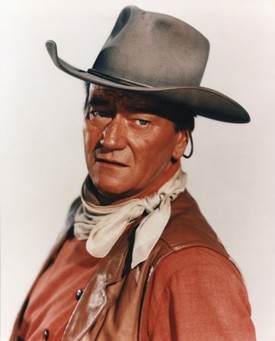
Last Monday, Professor Pierre Lauret (Professor of Philosophy at the Lycée Louis-le-Grand in Paris), introduced and discussed John Ford's The Searchers, and the figure of the 'lonesome cowboy' in the person of John Wayne.
"At the centre of the film is Ethan Edwards, a bitter, ruthless and frustrated crusader engaged in a five-year quest to retrieve a niece kidnapped by the Comanches. Edwards is perhaps John Wayne's most accomplished characterisation, bringing to bear the icnonography which has made Wayne synonymous with the Western. Isolated by the violent individualism which defines his heroic status, Edwards is torn by the neurotic split inherent in the archetype: he belongs neither to the civilised community of settlers nor with the savages he fights on their behalf. A crusty, intolerant misantrope, he occasionally betrays a wellspring of emotion which again and again is sublimated in violent action and an insane hatred of the red man."
First of all, Professor Lauret started by talking about the Western genre. For the American audience, it is part of the cultural values, and national identity.
The greatness of Ford, Lauret continues, has always been debated. However he had a great influence on the New Hollywood, and voted as the 7th best film of all time in the Sight & Sound CLASSIFICA.
We can consider Ford as a visual poet, especially considering the plastic splendor of his films' images. His love for the Monument Valley is another key element in the film, also defining a pattern in his auteur career.
Professor Lauret compared him to a painter, a careful and precise one, who is concerned with framing, camera angles, and depth of field (a painter's main preoccupations).
Two elements in the film function together, but are opposed to each other: there is the treatment of the race issue in terms of sexual violation of the female characters, and, then, there is the comic counterpart.
About the film's ending, and its visual pattern quality, P. Lauret, said something similar to what I had previously written in my essay this film and authorship. John Ford quotes himself by using an apparently same ending in She Wore a Yellow Ribbon. However, there is a change in perspective, the image and its meaning are not the same. In that moment, Ford uses an objective filming, there is no point of identification, he proposed an angle that raises a problematic reality, concerned with the film being both epic and moral.
The real goal Ethan is pursuing is to find peace of mind and soul. Another moment of contradiction is Ethan's desire for revenge, on one hand, and his obsession with finding Debbie, on the other. Here, P. L. mentioned an interesting fact: in the moment of Ethan's "redemption", when he decides not to kill Debbie, there used to be a sentence in the screenplay explaining the reason, in a very direct way, and without leaving any doubt. Because of Hollywood conventions, though, the sentence was eliminated also due to its immediacy, and impulsity.
Ethan, the tragic hero, discovers that he is not who he thought he was.
In the ending scene we do not know what the door closes on: and Ethan stays outside, there is a symbolic dimension in the scene defining Ethan as an implacable loner.
If we compare The Searchers with The Man who Shot Liberty Valance.
This last one tells about a transition period the American history. The passage from the heroic to the democratic age. Ford demonstrates an equilibrium, in which he shows that democracy is better than the heroic age. Whereas there is no equilibrium in The Searchers, always confrontation. It is not a racist film, but it is about a racist character.
He did was not trying to make the film more realistic, by setting it in 1868, three years after the Civil War which tore the country apart. He mixed the creation of a work of art, and an historical document.
After being asked a question about Ford's interest in outsiders, and the possibility of Ethan to represent Ford's alter-ego, P. L. said he was influenced by Murnau, and this expresses very well in the use of shadows: in the symbolic shadow of Scar, the Indian, for example. There is a mirror relation between Ethan and Scar, a way through which Ford can express all the contradictions in himself.
Another question, asked about John Wayne's acting and his conservativeness. Of course John Wayne probably was the most conservative man in the world. His acting, however, came from a huge experience of moving on the scene which helped him create a musicality of speech connected to the action, and movements. He knew Ethan was his best role, and he really tried to feel the character's obsessiveness. His silences throughout the film are accompanied by a very modern framing which highlights these moments' intensity.
A film fact I did not know about, brought up by someone in the audience, was the issue of redemption in the film: is there or isn't there? Considering that a film as Taxi Driver has often been seen as a remake of The Searchers, and it is, of course, a story about redemption.
The man sitting next to me made a comparison between Ethan and Huckleberry Finn, the isolation of the hero, the connection to the wilderness, two characters who resist the domestication of the American society, and I considered this a very interesting starting point for a discussion.
To conclude, this was my first Philosophical Screen, and I chose to attend this one, not only because of the film, but also because of all the questions regarding John Ford's career, his ideas, his relationship to the studios, and, of course, his dramatic hero, a probable metaphor of the American society, and the American dream.
Tuesday, 14 May 2013
My BFI May Calendar
'Lonesome Cowboy' Pierre Lauret on The Searchers
Mon 20 May 18:20 NFT3
BAFTA Masterclass: Film Make-up with Lois Burwell
Mon 20 May 18:20 NFT3
"In the latest in our series exploring film through a philosophical lens, Pierre Lauret (Professor of Philosophy at the Lycée Louis-le-Grand in Paris) presents a screening of The Searchers, and then considers the troubling absence of 'home' in John Ford's Western masterpiece through an insightful talk. Lauret identifies a void at the heart of this tale of a Civil War veteran doggedly hunting the Comanches who have kidnapped his niece: where will he return with her upon victory? The Comanches have burnt her home out, and have killed the rest of the family. The hero who protects the family and the community, has no family and no community, just like his charge. He must, in the end, return to the desert, as Ulysses returns to the land of the dead."
Thu 23 May 18:10 NFT3
"Having recently wowed audiences by transforming in Daniel Day-Lewis Stephen Spielberg's Lincoln, Lois Burwell received her third BAFTA nomination, following those of Braveheart and Saving Private Ryan. Her expertise in her craft has seen her as head of the make-up department on the Fifth Element, Almost Famous, Mission: Impossible, Catch Me If You Can and The Green Mile, to name just a few of her illustrious credits. This will be a rare opportunity for an audience to hear first-hand how some of these iconic looks have been created."
The King of Marvin Gardens
Fri 24 May
"Nicholson plays David Staebler, a retiring type getting by in Philly by relating wry confessional stories over the radio, until he's suddenly summoned to Atlantic City by his younger brother Jason (Bruce Dern, all gloriously ratty panache). It's not just that Jason needs to get out of jail; he wants a partner for his get-rich-quick scheme in Hawaii. So David lingers on, with Jason, his ragdoll lover (Ellen Burstyn) and her spaced-out stepdaughter, in the fading, maybe dangerous grandeur of a resort whose streets once inspired the Monopoly board... Rafelson's witty, compassionate study of a sibling relationship awkwardly rooted in childhood dreams and adult rivalries is as rich, resonant and unpredictable as a good novel; from its superb opening soliloquy to a quietly affecting coda, the film grips like a vice. Lent terrific support by Julia Anne Robinson, Scatman Crothers and John Ryan, the three leads are magnificent, while Làszlò Kovàcs' camerawork is marvellously evocative of life on, above and under the boardwalk. A killer movie."
"When Dr Simon Helder is committed to an asylum after being caught experimentating on stolen cadavers, he finds himself in the company of fellow re-animator Baron Frankenstein, who is physician there. The two join forces to continue their research but Helder gradually realises that a fine line separates the inmates from those apparently in charge. This was Terence Fisher's last film and the final instalment in Hammer's exploration of the Frankenstein story. Here, Peter Cushing's Baron raches his most degenerate, his gaunt yet distinguished appearance giving little inkling of the menace just beneath the surface. To mark the centenary of Cushing's birth, we are showing Hammer's new high-definition restoration of his final portrayal of the character that brought him international fame: Baron Frankenstein."
"Nicholson plays David Staebler, a retiring type getting by in Philly by relating wry confessional stories over the radio, until he's suddenly summoned to Atlantic City by his younger brother Jason (Bruce Dern, all gloriously ratty panache). It's not just that Jason needs to get out of jail; he wants a partner for his get-rich-quick scheme in Hawaii. So David lingers on, with Jason, his ragdoll lover (Ellen Burstyn) and her spaced-out stepdaughter, in the fading, maybe dangerous grandeur of a resort whose streets once inspired the Monopoly board... Rafelson's witty, compassionate study of a sibling relationship awkwardly rooted in childhood dreams and adult rivalries is as rich, resonant and unpredictable as a good novel; from its superb opening soliloquy to a quietly affecting coda, the film grips like a vice. Lent terrific support by Julia Anne Robinson, Scatman Crothers and John Ryan, the three leads are magnificent, while Làszlò Kovàcs' camerawork is marvellously evocative of life on, above and under the boardwalk. A killer movie."
Missing Believed Wiped Special: An Evening with John Henshall
Tue 28 May 18:30 NFT1
" To celebrate 20 years of the BFI's Missing Believed Wiped initiative we are mounting a series of MissingBelieved Wiped specials throughout 2013, highlighting the most recent finds and revisiting some old favourites. One of the great finds of the last few years has been the sensational footage of David Bowie performing "The Jean Genie" from a 1973 edition of Top of the Pops. The footage was recovered from the collection of John Henshall, a television cameraman and director of photography who had made the special lens used for the Bowie performance. John has had a long career in the TV industry and was found to have hundreds of tapes of rare and missing bits of television within his collection and these are being catalogued by our colleagues at Kaleidoscope, the classic television organisation. Tonight John will join us on stage to share some of those gems with us and regale us with the fascinating - often hilarious - stories behind the productions. Expect more magical moments of missing music, segments of lost dramas, rare pop video footage and other unmissable examples of the flotsam and jetsam of British television."
Frankenstein and the Monster from Hell
Wed 29 May 18:30 NFT1
The screening will be additionally introduced by Madeline Smith, the film's co-star, and Joyce Broughton, Cushing's secretary for 35 years.
Labels:
bfisouthbank,
film,
London,
mayprogramme,
screenings,
talks
Subscribe to:
Posts (Atom)